
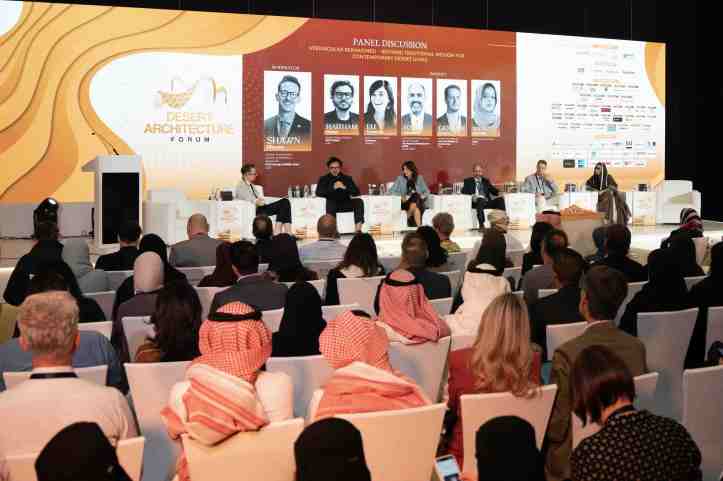
Forum brings architects, developers, planners and government stakeholders together to explore how Saudi heritage, climate intelligence and innovation can shape the next generation of sustainable cities
Riyadh, Saudi Arabia: As Saudi Arabia continues one of the most ambitious periods of urban development in its history, architects, planners, developers and industry leaders will gather in Riyadh for the 2nd Desert Architecture KSA Forum, taking place from 12–13 October 2026 at the Radisson Blu Hotel & Convention Center, Riyadh Minhal.
The two-day forum will focus on the convergence of heritage, sustainability, technology and contemporary design as the Kingdom looks to create cities and destinations that respond intelligently to the desert environment while retaining a distinctive Saudi architectural identity.
Aligned with Saudi Vision 2030, the forum will place particular emphasis on climate-responsive and culturally grounded architecture and the role of the Saudi Architectural Map, which encompasses 19 regional architectural styles reflecting the Kingdom’s different climates, landscapes, materials and cultural traditions.
The discussion comes against the backdrop of an extraordinary development pipeline. According to figures highlighted by the Desert Architecture Forum, Saudi Arabia has more than US$1.3 trillion in active projects spanning real estate, hospitality, cultural districts, government facilities and infrastructure, with 5,200-plus developments in the pipeline. The event website also points to more than 470 urban masterplans being revised in alignment with the Architectural Map’s directives, while 13 regional municipalities and 28 government entities are integrating the architectural identity framework into planning, approvals and design briefs.
Against this rapidly evolving landscape, the forum will examine how lessons embedded in traditional desert architecture can work alongside advanced engineering, materials and technology to deliver environments that are both resilient and comfortable.
Husain Buhwaid, Senior Development Director, Misk City, said: “Desert Architecture Forum 2026 edition will be a key platform for essential dialogue among architects, planners, and leaders in the Kingdom not only about iconic architecture but also creating even more sustainable and livable urban environments with traditional solutions and engineered systems.”
Husain Buhwaid will participate in the opening panel discussion, “Building the Architectural Identity of Saudi Arabia Through the Saudi Architectural Map,” which will examine how the Kingdom’s 19 regional architectural styles can inform its future built environment. Discussions will explore the integration of regional culture, climate-responsive design and heritage into modern architectural practice, as well as the alignment of national design frameworks with giga-projects, urban transformation and Vision 2030.
The wider programme reflects the growing recognition that designing successfully for desert environments involves considerably more than creating visually striking landmarks.
The Forum’s second day will broaden the conversation from individual buildings to the evolution of entire desert cities. Sessions will examine how climate intelligence, policy, infrastructure and long-term urban planning can help establish desert cities as models for sustainable development. The programme will also address regenerative tourism, exploring how architecture can work with landscapes, heritage and local communities to create destinations that strengthen rather than diminish their surrounding environments.
The speaker line-up brings together expertise from government, development, academia, architecture and urban planning, with representatives from organisations including Misk City, ROSHN Group, Red Sea Global, AlUla Development Company, Diriyah Company, King Salman Park Foundation, Aseer Development Authority, Madinah Region Development Authority, Saudi Building Code Centre, Prince Sultan University and the the Royal Commission for AlUla, alongside leading international architectural and design practices like Foster + Partners, ZHA Architects, Gmp, Herzog & de Meuron, RMJM, Snohetta.

